
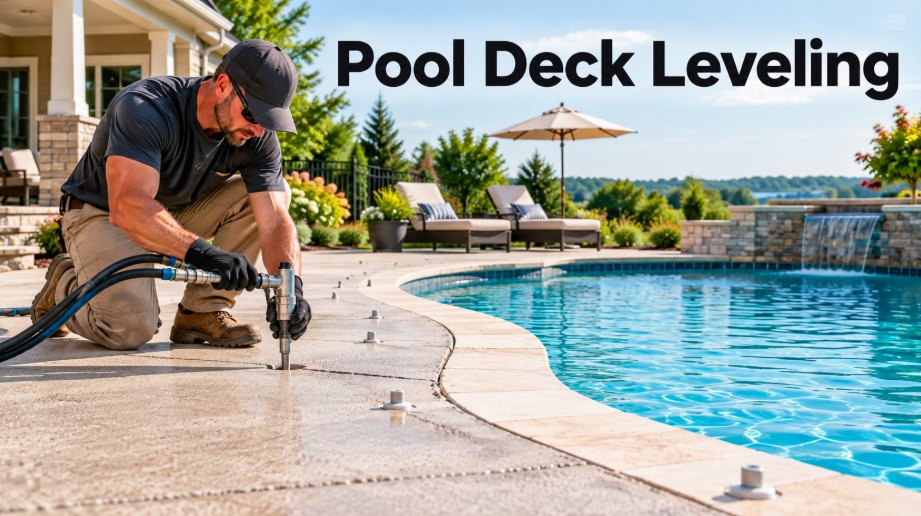
Pool deck leveling is a specialized concrete repair service aimed at correcting settled sections while protecting the surrounding pool environment.
Common Pool Deck Settlement Problems
Pool decks face conditions that differ from ordinary patios. Water is constantly present, underground plumbing may run nearby, and the soil around a pool may contain backfilled areas from the original construction.
Common symptoms include:
- Concrete sinking beside the pool
- Uneven joints between deck panels
- Water collecting in low areas
- Changes in elevation near coping
- Cracks between sections
- Uneven transitions to patios
- Sunken areas near gates
- Deck sections sloping improperly
- Separation near drains
Some settlement develops slowly over years, while other movement may become noticeable after drainage or plumbing problems.
Why Pool Deck Concrete Sinks
During swimming pool construction, soil is excavated and later backfilled around portions of the pool structure. If supporting material changes or consolidates over time, adjacent concrete may settle.
Other contributing factors can include water intrusion, leaking pool equipment, drainage runoff, soil erosion, damaged plumbing, or repeated saturation near deck edges.
Because water is naturally present around swimming pools, identifying the source of settlement is particularly important.
Pool Deck Leveling Assessment
Before lifting concrete, we evaluate the relationship between the deck and the pool itself.
We pay attention to:
- Pool coping
- Expansion joints
- Deck drains
- Skimmer areas
- Equipment pads
- Pool plumbing locations
- Steps
- Patio connections
- Fences and gates
- Surrounding landscaping
A pool deck should not simply be made flat. Surface slope is typically necessary to move water in an appropriate direction rather than allowing it to flow toward the pool or nearby structures.
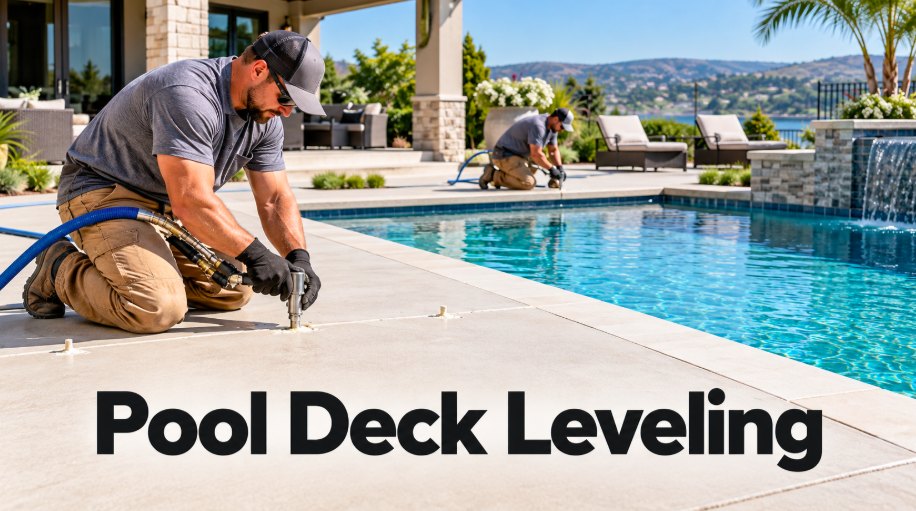
Leveling Concrete Near Pool Coping
The transition between the pool deck and coping requires careful work.
Deck concrete and the pool structure can move differently, and proper separation between them is important. When the surrounding slab settles, a pronounced edge can develop.
Leveling may reduce that difference when site conditions allow, but the correction must be performed without treating the pool structure and deck as though they were one continuous slab.
Improving Drainage Around the Pool
Standing water is one of the most common complaints associated with settled pool decks.
Low sections can prevent water from reaching deck drains or proper runoff areas. By changing the elevation of affected panels, leveling may improve drainage across portions of the deck.
We also examine whether clogged drains, damaged drainage systems, landscaping, or other conditions contribute to the problem.
Protecting Pool Features During Leveling
Swimming pools contain numerous nearby components, which may include plumbing lines, electrical systems, lighting, skimmers, drains, and equipment.
The location and construction of these features are considered before work begins. Our goal is controlled concrete correction with minimal unnecessary disturbance around the pool environment.
When Pool Deck Replacement Makes More Sense
Concrete leveling is primarily intended for slabs that remain reasonably sound but have moved vertically.
If the deck is extensively broken, deeply deteriorated, heavily spalled, or damaged throughout its thickness, replacement may provide a better long-term result.
A professional evaluation helps distinguish between a settlement problem and concrete that has reached the end of its useful service condition.
Maintain a More Comfortable Pool Area
Leveling can improve the transitions throughout an existing pool deck while preserving the look of established outdoor spaces.
If you notice sinking concrete, uneven joints, pooling water, or changes around the coping, schedule an inspection before the movement becomes more extensive.